By Sree, founder of My Workbelt. 20 years running a service business.
Quick Links
- Why your locksmith software shows calls, not margin
- What to capture on every locksmith job
- Where locksmith margin leaks, by job type
- Picture This: a typical scenario MyWorkbelt clients uncover
- What to do when you find a leak
- Check your own numbers this week
- Quick answers
- See it on your own locksmith jobs
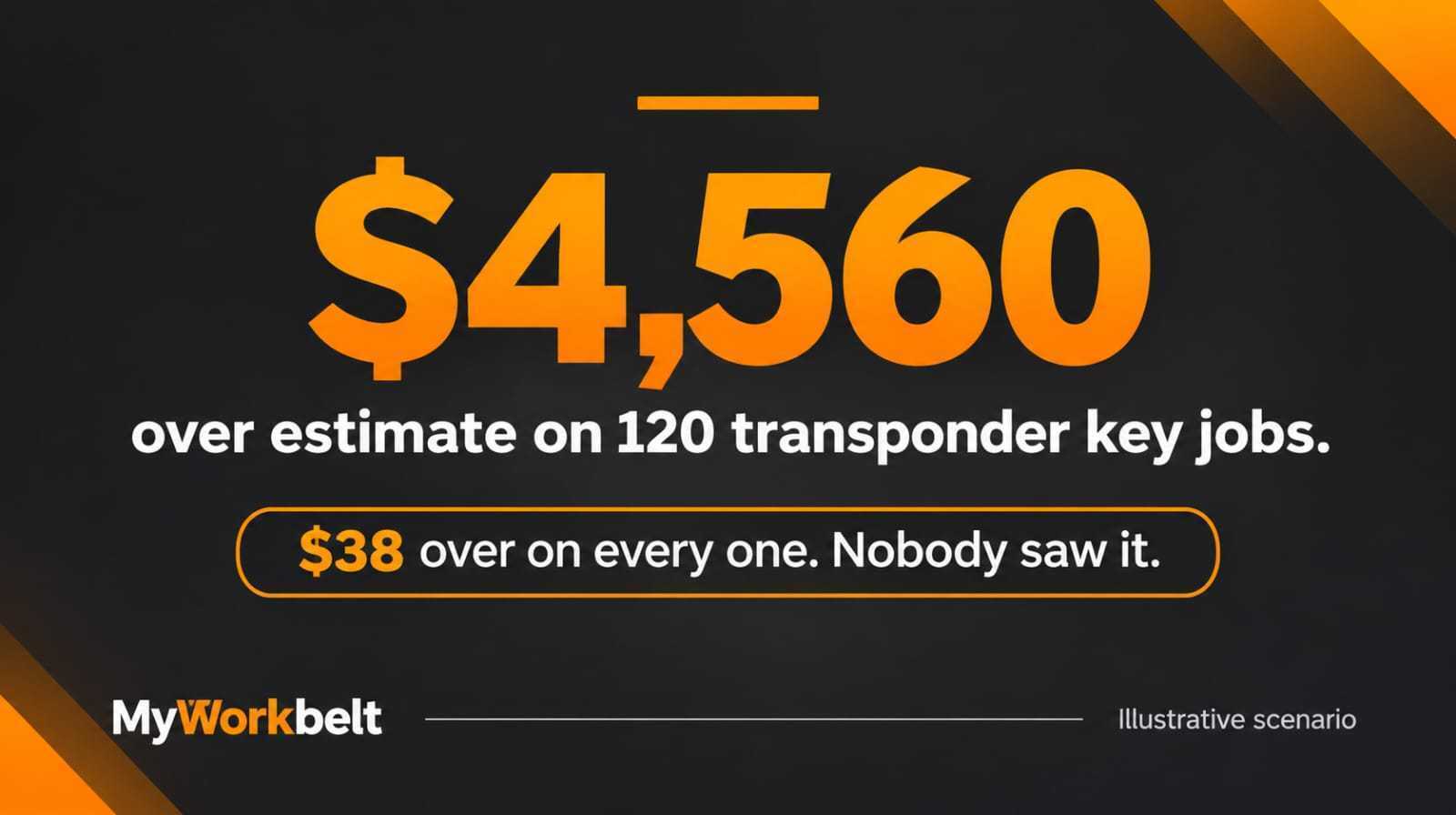
$4,560. That’s what 120 transponder key jobs ran over estimate for one six-tech locksmith shop in six months. Nobody noticed, because nothing on the dashboard was built to notice. (This is an illustrative scenario. The details are below.)
Locksmith job costing is the habit of comparing what you estimated a job would cost against what it actually cost, job type by job type. Most shops don’t do it. They care about margin. Their software just never asked.
Why your locksmith software shows calls, not margin
Your software knows 640 service calls went out. It knows what you invoiced. The revenue line climbs. It doesn’t tell you which of those calls paid you.
I ran a service business for 20 years. I never had software that could tell me which jobs made money. Revenue was easy to see. Margin wasn’t.
Locksmith work makes the gap wider, because the jobs are so different. A rekey, a 2 a.m. lockout, a smart lock install, and a transponder key all go through the same invoice screen. They don’t share a cost structure.
Then March arrives. The year-end P&L lands after the prices are set, the key blanks are ordered, and the contracts are signed. The data was real. It came three months late.
Jobber and Housecall Pro are good at getting a small shop organized. We built around the layer they don’t have: whether the work was worth doing. If you’re weighing them, here’s how My Workbelt compares to Jobber and to Housecall Pro.
You can see the same pattern in the category itself. Browse Capterra’s locksmith software listings and the features reviewers value most read like a dispatch checklist: scheduling, dispatch, invoicing, inventory, work orders. Job costing isn’t on that list.
What to capture on every locksmith job
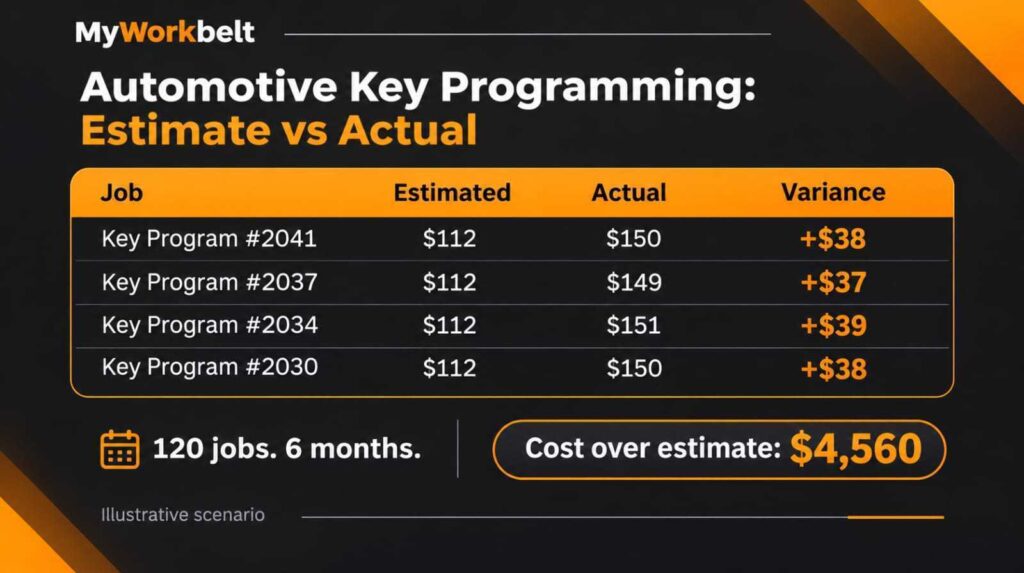
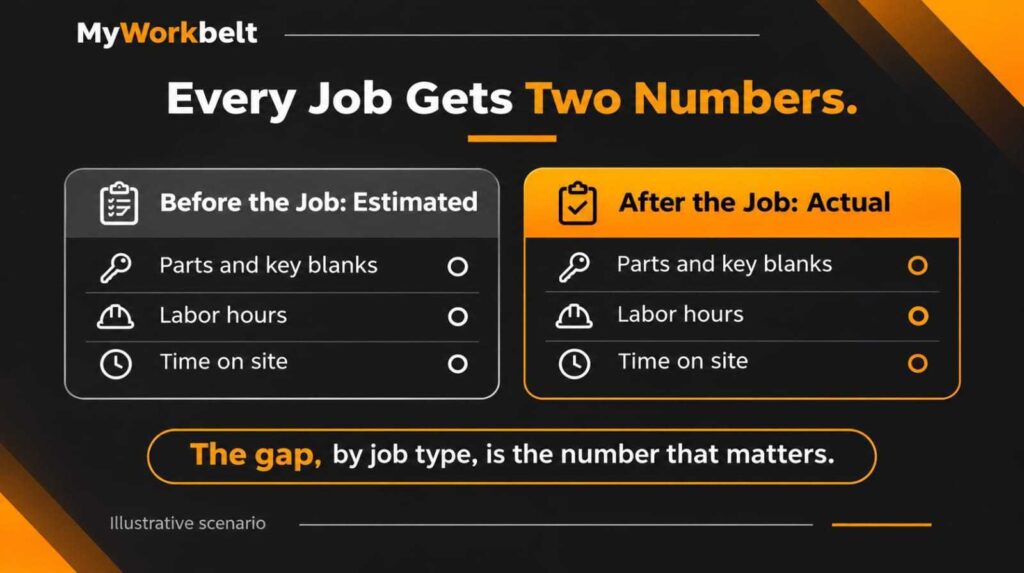
Every job needs two sets of numbers. Before it starts, write down what you expect it to cost: parts and key blanks, labor hours, time on site. After it closes, record what it actually cost on the same three lines.
Then look at the gap. One job’s gap is noise. Forty jobs of the same type with the same gap is a pattern, and a pattern is a leak.
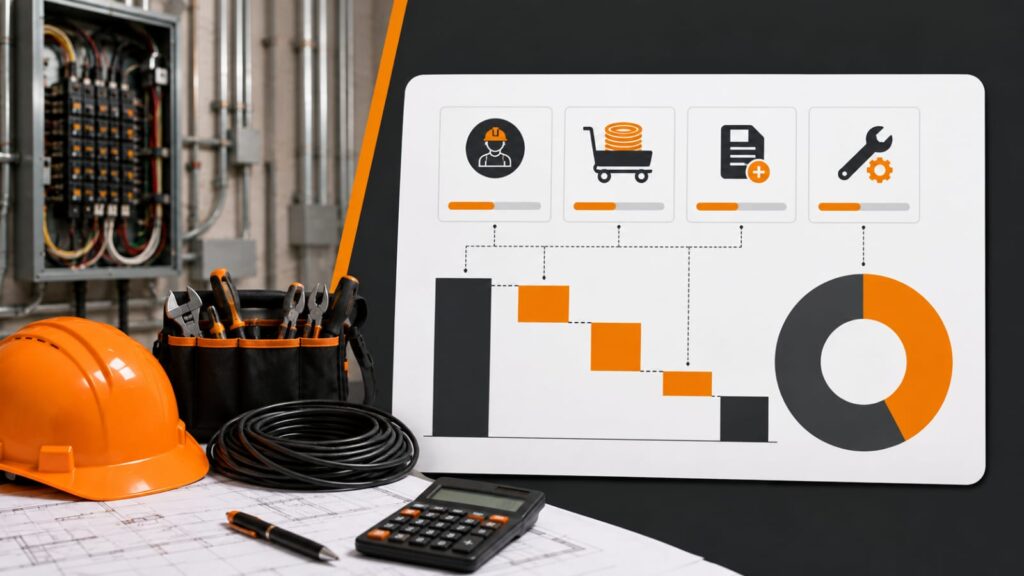
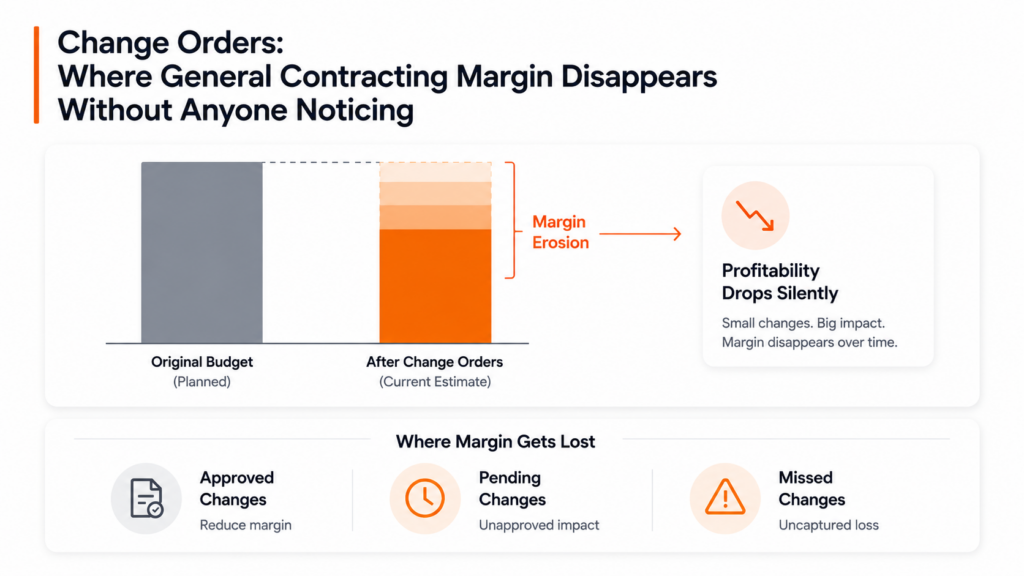
This is what Budget vs Actual does inside My Workbelt. The estimate is captured before the job, the actual after, and the gap shows up by job type. You don’t build the report.
Where locksmith margin leaks, by job type
Each job type fails in its own way. Check these five against your own numbers:
- Rekeys. Compare pin kit cost and minutes per cylinder against what you quoted. On multi-door jobs, check whether you priced per door or per hour.
- Home lockouts. Add drive time to time on site. A flat call price can hide a long drive.
- Smart lock installs. Check hardware cost against your quote, and how often a second visit was needed to finish setup.
- Automotive key programming. Compare blank and programming costs against the estimate, model by model. Small overruns repeat on every key.
- Emergency and after-hours calls. If you pay techs extra for nights but charge the same call price, the gap shows up here first.
Your mix will weight these differently. That’s the point of costing by job type, not by job. A shop can look healthy overall while one line loses money every time it runs.
Picture This: a typical scenario MyWorkbelt clients uncover
Both scenarios below are illustrative, not a specific client.
The key blank problem. You’re a six-tech operation. Automotive work is your fastest-growing line, and the margin looks fine on paper. At your first Growth Review, your Client Success Manager walks you through Budget vs Actual on 120 transponder key jobs. Parts and programming costs are running $38 over estimate. Every key.
That’s $4,560 over six months. It wasn’t a pricing problem. It was a key blank problem. You fixed it the following week.
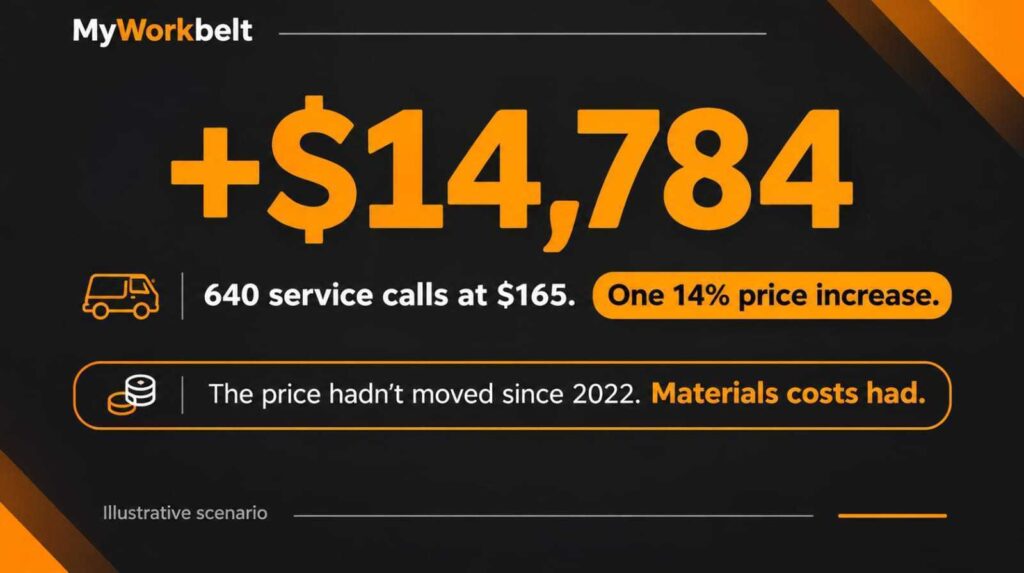
The 2022 price. You priced your service calls in 2022. You haven’t touched the number since. Materials costs have moved 18% since then. Your call price hasn’t. At your first Growth Review, your CSM models the gap: a 14% increase across 640 calls at $165 recovers $14,784.
You raised prices the next quarter. Three customers pushed back. None of them left.
 What to do when you find a leak
A leak has a cause, and the fix depends on which one it is. Don’t reach for the price first.
If parts cost more than you quoted, check your supplier price and your quote template before you touch what the customer pays. That was the key blank problem above. The quote was stale, not the price.
If labor ran long, look at routes and job scope before you blame the tech. A tech whose time on site runs 20 minutes long across 40 jobs a quarter is usually a routing flag, not a performance flag.
If the job is priced off a year when costs were lower, reprice it. Do it by job type, not across the board. Your rekeys and your smart lock installs won’t need the same move.
Change one thing at a time. Then watch the next 30 days of that job type. If the gap closes, the fix worked. If it doesn’t, the cause was something else, and you’ve just ruled one out.
Check your own numbers this week
You don’t need software to start. Pick the job type you run most and pull the last 90 days.
- List each job: date, quoted price, parts cost from your supplier invoices, labor minutes from your timesheets.
- Subtract parts and labor cost from the price. That’s the margin on each job.
- Sort lowest to highest and read the bottom ten.
- Look for what they share: same job type, same tech, same time of day.
It takes a few hours. If the bottom ten share a pattern, you’ve found a leak. If you do this every month, you’ve also found the Friday ritual we built the software to end.
Quick answers
What is locksmith job costing?
It’s comparing what you estimated a job would cost against what it actually cost, grouped by job type. The gap shows which jobs earn their price and which don’t.
How do I know which locksmith jobs are profitable?
Record estimated and actual parts, labor, and time on site for every job. Then group the results by job type. A gap that repeats across 40 jobs is a leak.
What should locksmith job costs include?
Parts and key blanks, technician labor, and time on site, including drive time. Add any hardware or programming costs specific to the job.
How often should I review job profitability?
Monthly. By year-end, your pricing and key blank orders are already set.
See it on your own locksmith jobs
My Workbelt shows Budget vs Actual by job type, and a real person walks you through it every month. See how it works for locksmith shops, or book a demo and we’ll show you what your numbers look like.
60-day money-back guarantee. If we don’t find at least one hidden profit opportunity in your first 60 days, we refund every dollar you’ve paid us.