Quick Links
- Why business-level profit hides the problem
- Service calls: fast work, hidden cost
- New construction: profit is decided before the job starts
- Commercial contracts: where the loss usually hides
- Picture This: the plumbing job-type reveal
- What changes when you can see profit by job type
- What to look for in plumbing business software
- Frequently asked questions
- See which of your jobs made money
Your plumbing business can look healthy and still lose money on one job type every quarter. Most plumbing business software never shows you that, because it reports at the business level. Revenue is up. The bank balance is fine. So, you assume every truck is earning its keep.
Some aren’t.
I ran a service business for 20 years. I made this mistake myself. Total profit hid the one line of work that was quietly costing me. This post walks through the three job types most plumbing shops run, why profit looks different on each, and what changes once you can see it separately.
Why business-level profit hides the problem
Your accountant sends a P&L. It says the business made money. It doesn’t say which jobs made it.
Think of it as an average. If residential repair work earns a strong margin and commercial contracts run underwater, the strong work covers the weak work. The total looks fine. You keep bidding the same way, keep taking the same contracts, and keep staffing the same trucks.
That’s cross-subsidy. One job type pays for another, and nobody sees the transfer.
Plumbing makes this worse than most trades because the work is so mixed. A same-day drain clearing and a six-month commercial contract don’t share a cost structure. Treating them as one number is how a shop loses money for years without a single bad month.
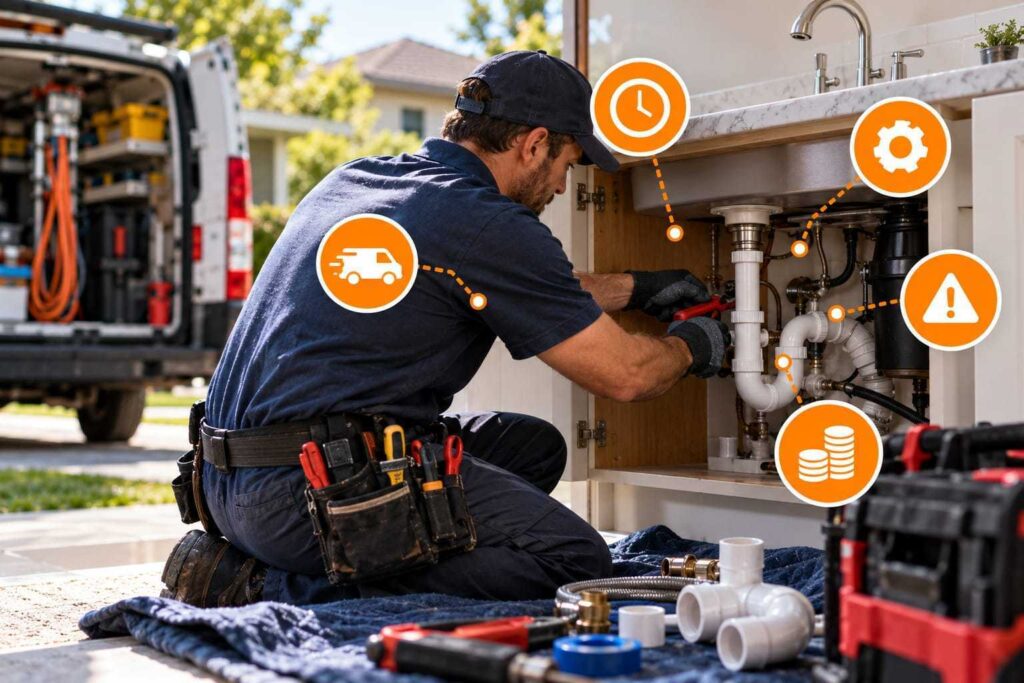
New construction: profit is decided before the job starts
New construction runs on bids. You price the rough-in, the top-out, and the trim-out, and you live with that number for months.
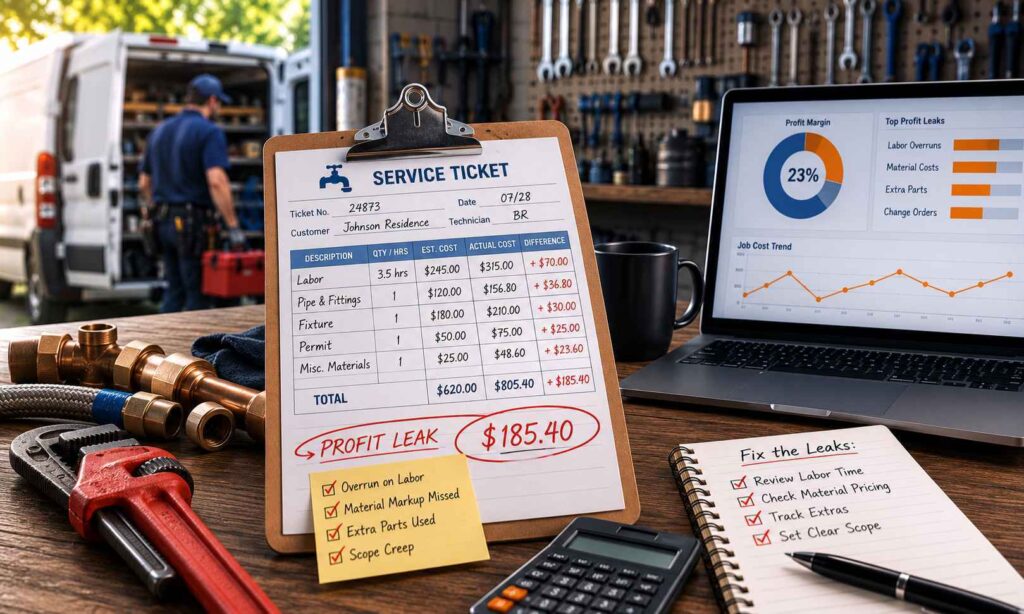
Profit here is a bid-accuracy question. Did you estimate the labor hours right? Did material prices move between the bid and the pipe? Did change orders get priced, or did your crew just absorb them?
The danger is timing. A new construction job can run for months before anyone adds up what it costs. By then, the next bid is already out, built on the same bad assumptions.
If you quote from a template you built years ago, this is where it shows. The template doesn’t know that labor and materials were moving. Your actual cost does.
Commercial contracts: where the loss usually hides

Commercial work feels like a safe move. Recurring revenue. Bigger tickets. A property manager who calls you first.
It’s also where plumbing shops lose money without knowing it. Commercial contracts often carry:
- Fixed pricing set at signing, long before costs changed
- After-hours and emergency response built into the rate
- Longer drive and wait time on larger sites
- Slower payment terms that tie up cash
Any one of those can erode margin. Together, they can push a whole job type below zero. And because the contract revenue keeps coming in, the business-level numbers look fine.
That’s the reveal. The commercial side is the one most owners assume is the strong performer, and the one the data often says otherwise about.
Picture This: the plumbing job-type reveal
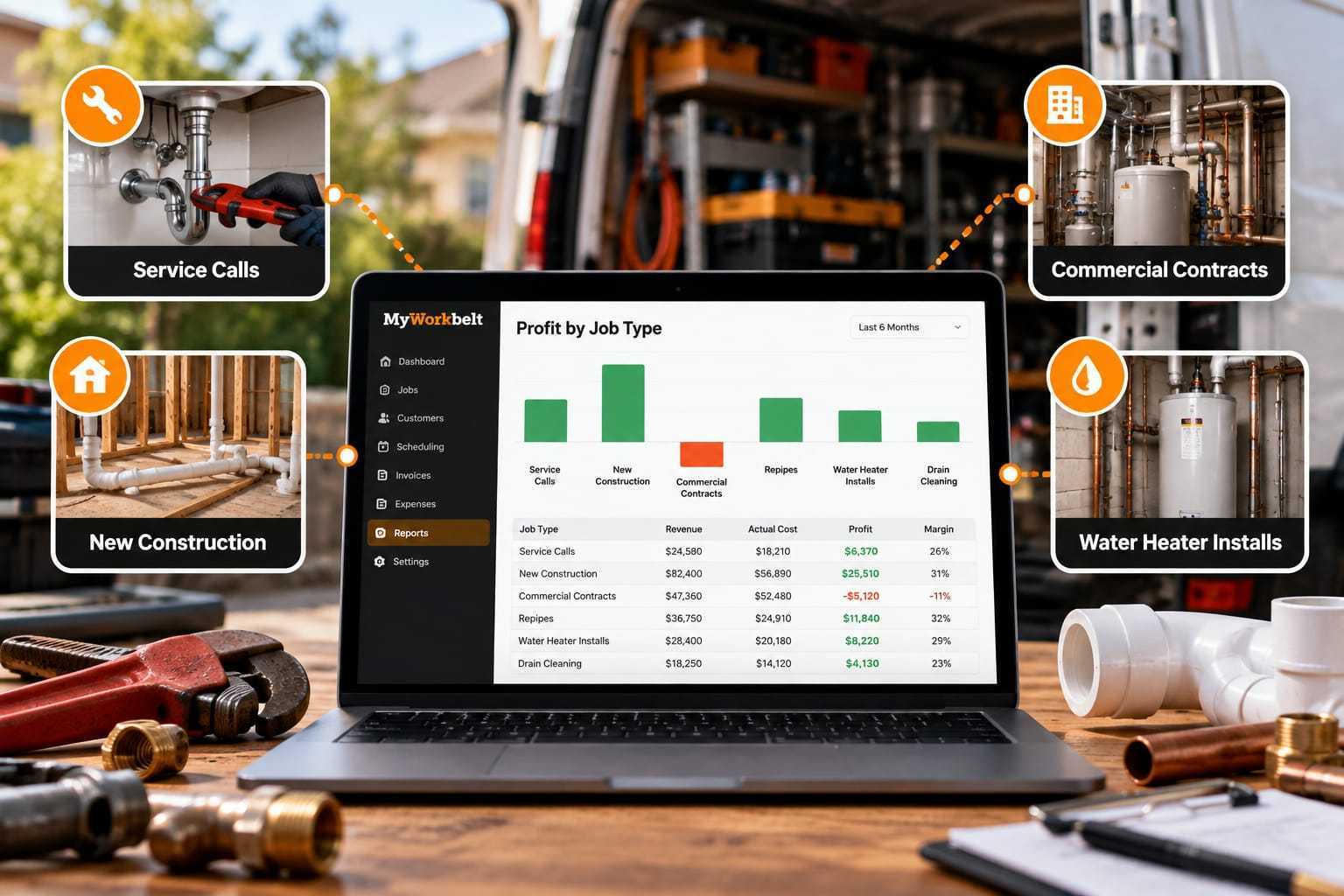
A typical scenario MyWorkbelt clients uncover. Illustrative, not a specific client.
You run a plumbing operation. Your gut says emergency calls are your best work. The tickets are big, the customer is grateful, and the crew moves fast. After-hours feel like where the money is.
Then you pull profit by job type for the last 90 days.
Repipes came in at 29% margin. Water heater installs landed at 22%. Drain cleaning ran at 16%. Service tickets managed by 5%. Emergency after-hours calls ran at -4%.
The business never looked unhealthy. Repipes and water heater installs covered the gap. You were paying to run your busiest, most exciting calls out of the profit from your quietest work.
Nothing in your books told you. The total was positive. It took a job-type view to find it.
What changes when you can see profit by job type
Once you can see each job type on its own line, the decisions get specific.
You reprice the right work. If commercial calls run negatively, you know exactly where the rate is wrong. You don’t raise prices across the board and risk the residential customers who were already profitable.
You bid for new construction with real numbers. Actual labor hours from past jobs replace the template you’ve used since 2022. Your next bid reflects what the work actually costs.
You renegotiate or walk away. A commercial contract that loses money every quarter is a choice, not a fact of life. Some get repaired at renewal. Some of you let go.
You stop guessing about your techs. When time on job is compared to what you estimated, a long-running call stops being a mystery. Sometimes it’s a routing problem, not a performance problem.
None of this requires a bigger business. It requires seeing the right line.
What to look for in plumbing business software
Most plumbing business software tracks the work. Scheduling, dispatching, and invoicing. That’s necessary and it’s table stakes. It doesn’t tell you whether the work was worth doing.
When you compare options, ask these:
- Does it compare estimated cost to actual cost by job type? Not just revenue by job type. Cost against what you expected.
- Does it handle service calls and long-running projects in the same account? Plumbing shops run both.
- Does it work with your bookkeeper’s setup? Look for integration that a QuickBooks ProAdvisor has validated, so your books stay clean.
- Does someone help you read the numbers? A report nobody acts on is just another report.
At MyWorkbelt, that’s what Budget vs Actual and the monthly Growth Review do. Budget vs Actual shows what each job type was supposed to cost against what it did cost. A named Client Success Manager walks you through it once a month. For more on how the plumbing side works, see our plumbing business software page.
Frequently asked questions
What is plumbing business software?
It’s software that runs the daily work of a plumbing shop: scheduling, work orders, invoicing, and customer records. The better versions also track job costs, so you can see profit, not just activity.
Can plumbing business software show profit by job type?
Some can. It requires comparing what you estimated a job would cost to what it actually costs, grouped by type. Many platforms report revenue only.
Why would a plumbing company lose money on commercial contracts?
Fixed pricing set at signing, after-hours response, long site time, and slow payment can all cut margin. If costs rose after the contract was signed, the gap would widen.
How do I know which plumbing jobs are profitable?
Track estimated cost and actual cost for every job, then group them by type. Business-level profit won’t show you.
See which of your jobs made money
If you run a plumbing business and you’ve never seen profit by job type, book a demo. We’ll show you Budget vs Actual on a plumbing scenario that looks like your operation, and you’ll see what your numbers would say.
By Sree, founder of My Workbelt and a 20-year service business operator.