Quick Links
- What Jobber Was Built to Solve
- The Layer Jobber Doesn’t Reach
- Where the Margin Goes Without Anyone Noticing
- This Isn’t a Jobber Problem. It’s a Growth Stage Problem
- What the Difference Looks Like in Practice
- What Job-Level Visibility Actually Changes
- If You’re Evaluating What Comes Next
A straight look at what entry-level field service software gets right and the one layer it leaves out.
If you run an HVAC, plumbing, or electrical business with 5 to 25 technicians, you may be using Jobber or a similar platform as your field service software. And that is a great option, though it only solves half the problem. Jobber does what it promises. With Jobber, your work is scheduled, dispatch is cleaner than a whiteboard, invoicing goes out faster, and customers get notified. For a business moving from spreadsheets and sticky notes, it’s a real upgrade. This isn’t a takedown of Jobber. It’s a straight answer to a question more owners ask once they’ve been running field service software for 12 to 18 months: Why does the calendar stay full, but the margin still feels uncertain? The answer usually isn’t the software doing something wrong. It’s what the software wasn’t built to show you.
What Jobber Was Built to Solve
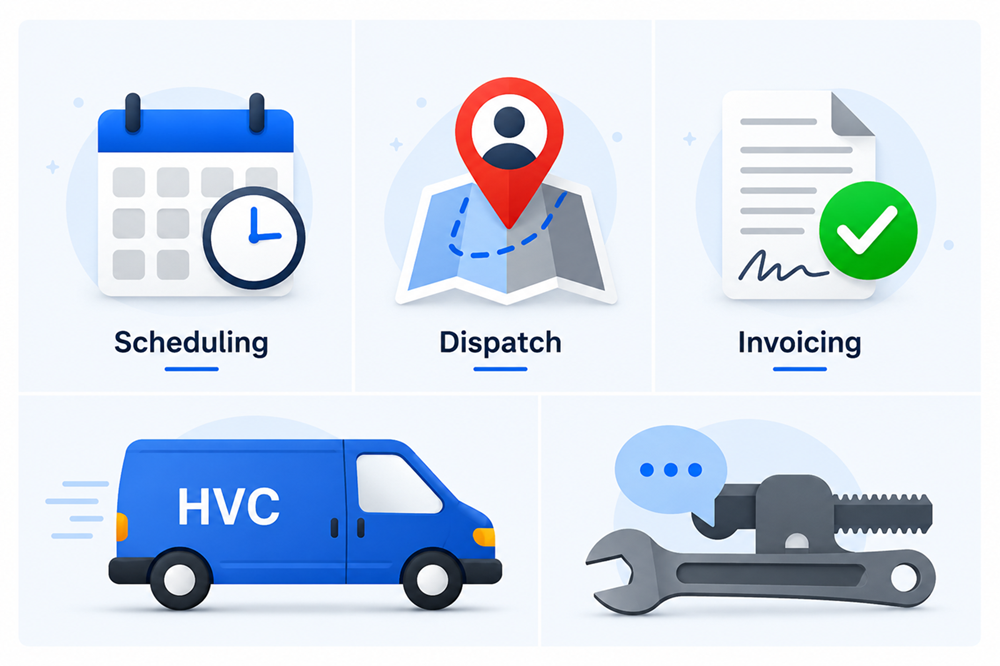
Jobber is operations software. It solves the coordination problem. Such as:
- Who is going where?
- When is the job scheduled?
- Has the invoice been sent?
- Has the customer confirmed?
These are real problems, and Jobber handles them cleanly.
For a startup business, that’s often the right tool for the initial stages. The chaos of early-growth field service is a scheduling and communication problem. Jobber helps to solve that problem.
But the gap shows up later.
The Layer Jobber Doesn’t Reach
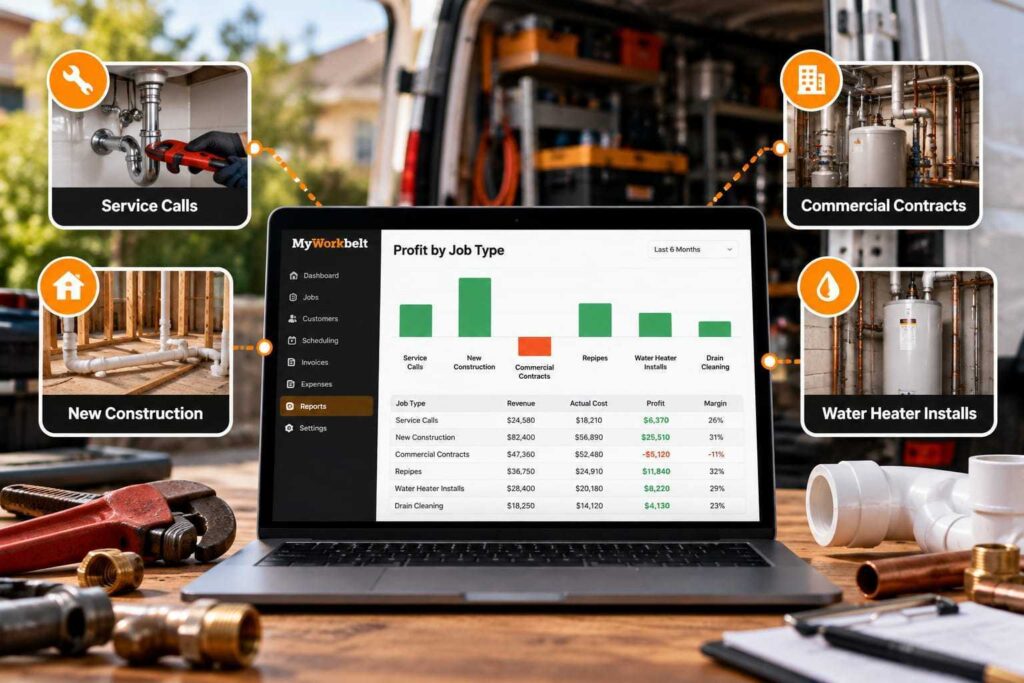
Once the scheduling problem is solved, a different question arises. And that’s “Are these jobs actually profitable?” That’s a different data problem. And it requires a different layer of tracking that most field service software, including Jobber, wasn’t built to surface. Specifically, the software most business owners need is: Budget vs. Actual, by job type, every month.
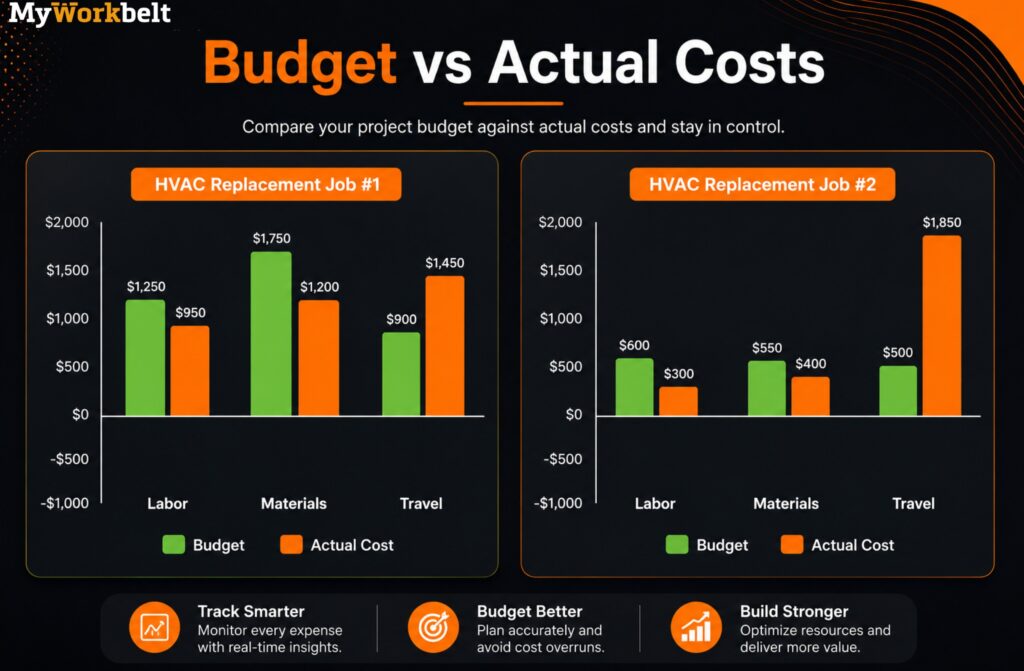
The software that can identify:
- What did you estimate the labor cost for residential replacements to be last quarter?
- What did it actually cost?
- What did the materials come in versus what you quoted?
- Which job categories are running over, and by how much?
The jobber can tell you the job is complete and the invoice is paid. It can’t tell you exactly whether you made money on it or not.
Where the Margin Goes Without Anyone Noticing
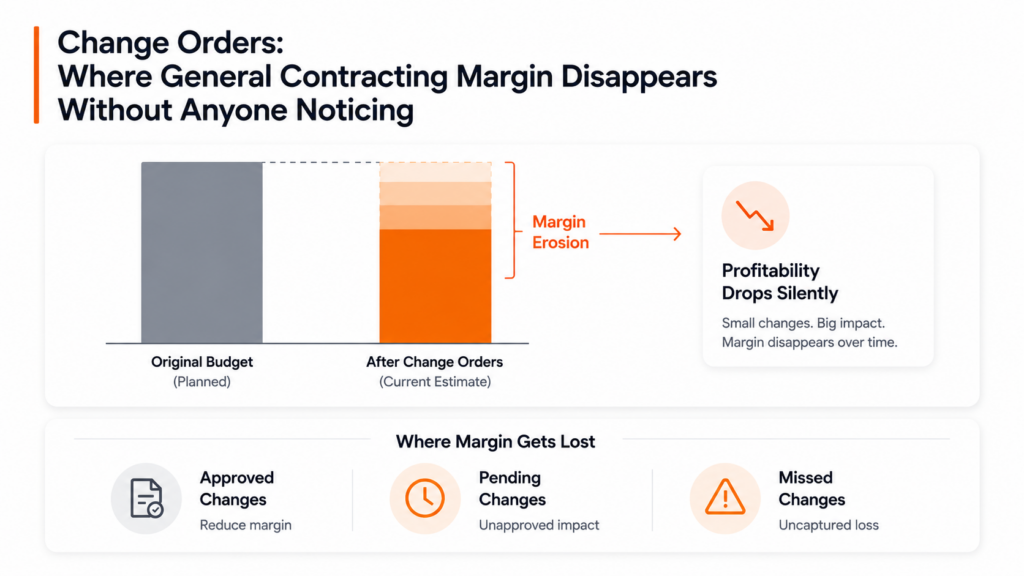
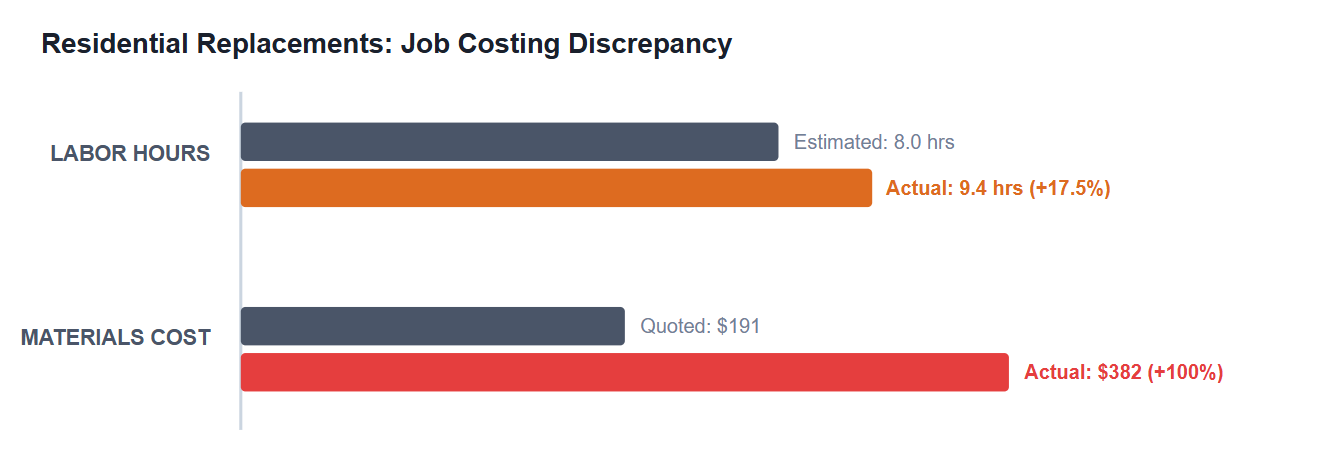 Three places account for most of the quiet margin loss in HVAC and field service businesses at the 5-to-25-tech stage. Replacement packages priced before costs changed. Equipment costs shifted, labor costs adjusted, fuel went up, but the package pricing didn’t. The calendar is full, and the work looks profitable until someone runs the actual numbers. By then, the same mistake was repeated across dozens of jobs. Labor hour creep. The install was estimated at 8 hours. It’s averaging 9.4. No single job feels like a problem. Across 60 jobs in a quarter, that’s 84 extra labor hours that don’t show up in any report; they dissolve into total payroll and disappear. Parts run and routing drifts. A technician makes an extra trip for a part. Another drives 20 minutes between jobs that could have been sequenced differently. Small individually. Compounding quietly. Never flagged because the software tracks that the job was completed, not what it actually cost to complete it. Jobber logs
the job. It won’t show the problem occurring behind the scenes of the jobs.
This Isn’t a Jobber Problem. It’s a Growth Stage Problem.
To be clear: Jobber isn’t failing you. It’s doing what it was designed to do. The visibility gap is a product of growth, not a flaw in any specific tool. A 6-tech operation losing $80 per job feels differently than a 20-tech operation losing $80 per job. Same mistake, very different compounding. When a business is small, success is just about keeping everyone busy. If your calendar is full, you feel like you’re winning. But as the business grows bigger, you add more workers, more types of jobs, and way more chaos. Soon, the game changes. Suddenly, just being busy isn’t enough. Your focus has to shift from “Are we working?” to “Is this work actually making us a profit?” Entry-level FSM software was built for the first question. Job-level profitability visibility answers the second.
What the Difference Looks Like in Practice
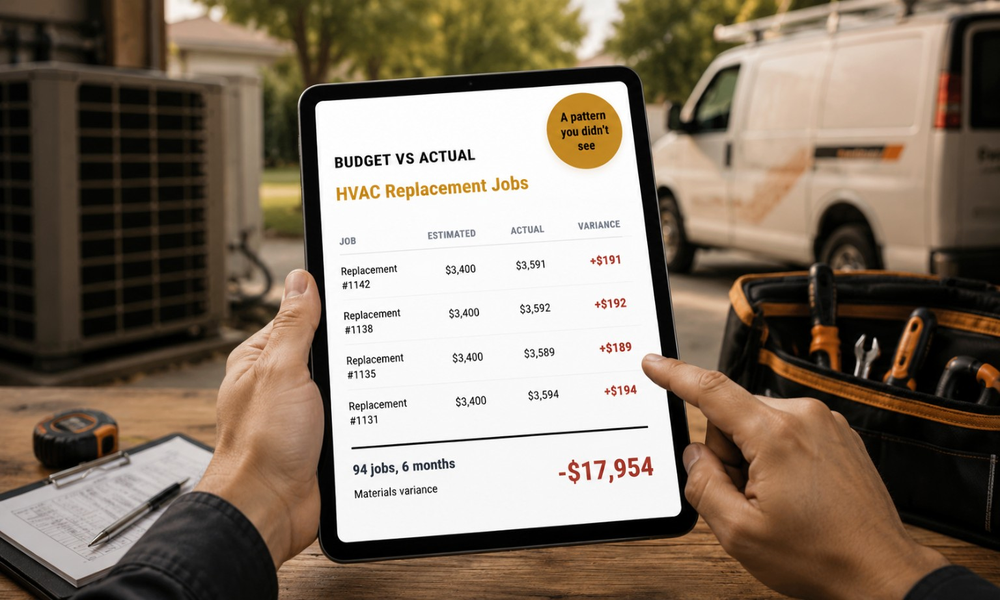
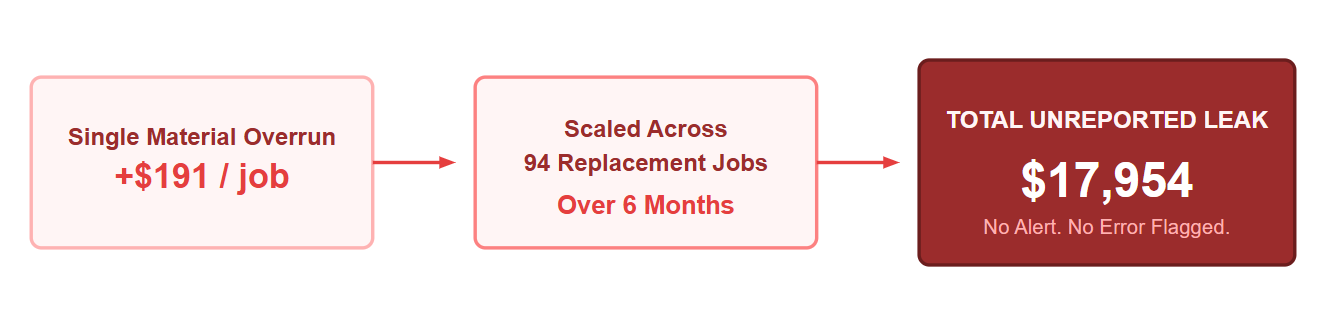 An HVAC company running 40 replacement jobs a month estimates $191 per job in materials. Actual costs came in $191 higher per job across 94 jobs over six months. $17,954. No alert. No report flagged it. The jobs showed as complete. Revenue looked fine. The leak ran quietly because the software tracked activity, not the margin. That’s the operational cost of missing the second layer. There’s no fire alarm. Just a slow, invisible drain that only shows up at year-end when the question is “why did a $2M revenue year still feel tight in October?”
What Job-Level Visibility Actually Changes
When you can see Budget vs. Actual by job type monthly, decisions get sharper fast. The replacement package that’s been underpriced for 14 months becomes visible before another year passes. The technician route running 1.4 hours overestimate shows up in data rather than a gut feeling. The job category with hidden material overruns stops being a mystery and becomes a line item with a decision attached to it. More jobs don’t automatically create more profit. Sometimes they scale the leak. The HVAC and other field service businesses that grow cleanly over the next five years won’t just be the busiest shops. They’ll be the ones who can answer one question with confidence: which jobs are actually making us money?
If You’re Evaluating What Comes Next
If Jobber is working for your operations and you’re hitting the margin visibility wall, the question isn’t whether to replace it overnight. The question is whether the tool you’re using can handle the next bigger problem or if you need to give it some backup. MyWorkBelt’s Budget vs. Actual tracking software compares what you planned to spend on each job against what you actually spent, by job type, every month. Not as a year-end exercise. As a regular operational view with a monthly Growth Review, where a real person sits with you and goes through what the numbers mean. Because data without that conversation usually becomes a report nobody reads after week three. More profit from every job. Not just less paperwork. Running 5 to 25 techs and hitting this wall? See how MyWorkBelt’s job-level profitability tracking works.