Quick Links
- What accounting tells you
- The question accounting can’t answer
- What job costing does
- What not knowing costs you
- The QuickBooks Gap and How We Fill It
- The fix isn’t complicated with My Workbelt
Revenue is up. The books are clean. Your accountant sent the P&L and nothing looks wrong. So why does your bank account feel tight every single month?
I spent twenty years asking that question for my own business. I had good months on paper but they didn’t translate to money in my account. It wasn’t careless spending. It wasn’t bad pricing. It was a gap in what I could see, and it took me too long to name it: My P&L and the actual profitability on the jobs I was doing were not the same thing. The difference between them is that many service businesses quietly lose money without knowing why.
What accounting tells you
Your accountant is not a problem. Neither is your QuickBooks. They’re doing exactly what they were built to do and you need them.
A P&L show your total revenue, total cost of goods, and gross margin at the business level, for a period that is already over. By the time your June statement lands in your inbox, you’ve done four more months of work using the same pricing and the same materials ordering. Whatever was wrong in June is still wrong in October. But you’re 4 months behind.
That’s a structural limitation, not a failure. Accounting is built to report. Job costing is built to help you look into the future and prevent costly, ill-informed decisions.
The question accounting can’t answer
Here’s the one I couldn’t get answered for years: Which jobs are actually making me money?
Not total revenue. Not an overall gross margin. Which specific kind of work, on a job-by-job basis, is running above or below what I estimated it would cost?
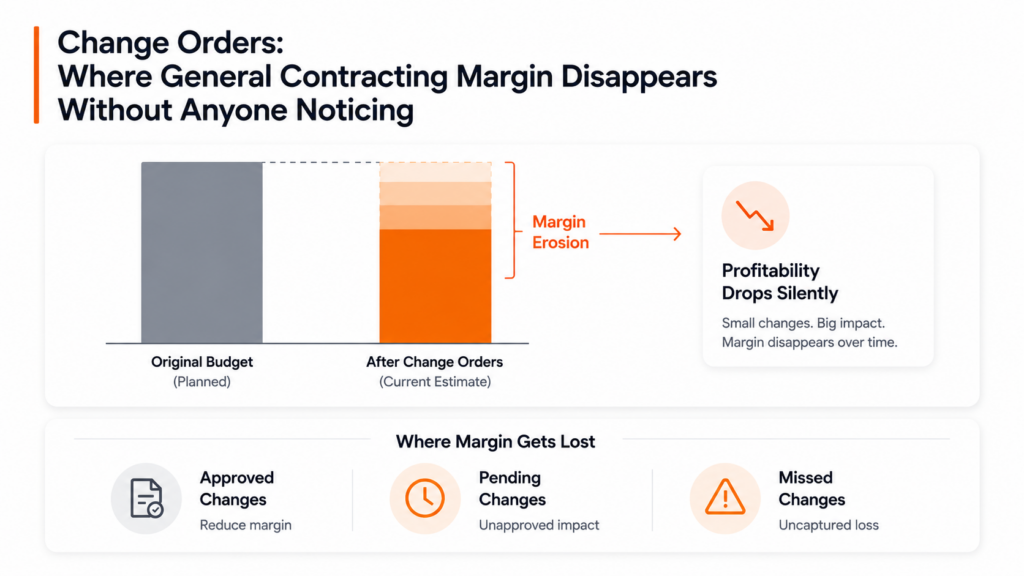
If you can’t answer that, then you are likely making wrong pricing decisions. You might be raising prices on the job types that are already profitable and leaving the ones that are slowly bleeding you completely unchanged. You might be doing more of your least profitable work because it looks busy and busy feels good.
The P&L can’t answer this question for you. It doesn’t know what you estimated a job would cost. It only knows what you spent.
What job costing does
Job costing compares each job type; what you estimated the work would cost versus what it costs. Materials, labor, time on job. Every time.
When you run that comparison across a month, or six months, patterns surface. A specific job type is consistently running $80 over on labor. Another is running $150 over on materials, every single time, and has been for two years. You didn’t know because no single job looked alarming. The loss was spread thin enough to hide.
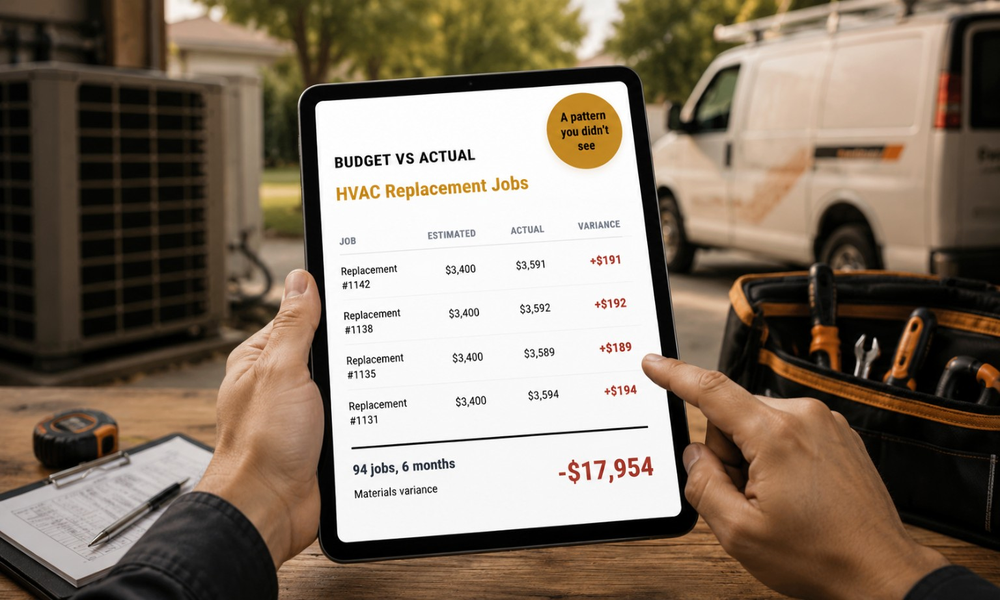
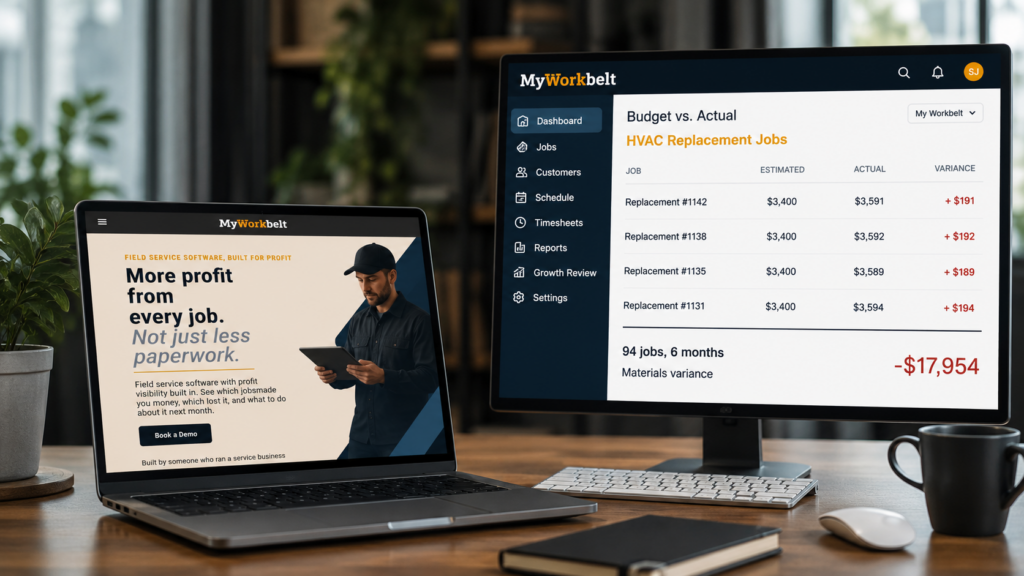
A typical scenario My Workbelt clients uncover you run a 12-tech HVAC operation, and residential replacements are your bread and butter. The margin looks fine on paper. But Budget vs. Actual surfaces a material overrun of $191 per replacement job. Across 94 jobs over six months, that’s $17,954 in unsurfaced loss. The P&L didn’t show it. The individual invoices didn’t show it. Nothing showed until the estimated cost and the actual cost were compared, at the job level, across a pattern.
That number was always there. It just wasn’t visible for you to make decisions.
What not knowing costs you
Three things happen when you’re running without job-level cost data.
-
Pricing decisions get made with your gut.
You set your rates based on what you charged last year, what competitors seem to charge, and whether customers pushed back last time, you tried to raise them. None of that is wrong; your gut is valuable. But if you combine your gut with data, you’re much better off. You could be busy and undercharging $80 per job on your highest-volume work. Gut + Data fixes that.
-
Your busiest job type might be your worst money maker.
If you’re doing 40 residential replacements a month but losing $100 per job to hidden material overruns, a slower month with tighter margins is more profitable. Invoice totals won’t show you that; they only tell you how much money passed through your hands, not how much you kept.
-
The leak compounds all year.
Winter is coming. Your accountant shows you the year. Your margins aren’t what you want them to be, and it’s there, in black and white. But the decisions that caused it, the pricing you didn’t adjust, the materials vendor you kept using, the job type you kept quoting the same way, all of that happened in January, February, March. Twelve months of a leak before you see the number. Job costing shows you in week one of month two.
The QuickBooks Gap and How We Fill It
We made sure that QuickBooks syncs with My Workbelt. Both Online and Desktop. The integration was reviewed and validated by a QuickBooks ProAdvisor, and we don’t take a client live until their bookkeeper has signed off on the sync.
But here’s the thing about QuickBooks: even a perfect sync doesn’t solve the job-level visibility problem. QuickBooks knows what you spent. It doesn’t know what you estimated. That comparison, estimated vs. actual at the job level, is what Budget vs. Actual does. It’s a layer above accounting, not a replacement for it.
Your accountant and your bookkeeper still do exactly what they’ve always done. You just stop relying on them to answer a question they were never built to answer.
The fix isn’t complicated with My Workbelt
Job-level cost tracking plus a monthly conversation with someone who knows your numbers. That’s it.
Budget vs. Actual shows you, by job type, what you estimated versus what you spent. The monthly Growth Review, which is a 30-to-60-minute call with a named CSM who comes prepared with your data, turns that report into a short list of decisions. Adjust this price. Look at this materials vendor. That job type is running clean. That one isn’t.

The software does comparison. A person makes sure you actually act on what it tells you.
If you’re running a tight operation and still feel like the money isn’t there at the end of each month, the problem probably isn’t your accountant. It’s that you’re not getting the right information quickly enough to make good decisions.
If you want to see what this looks like in your operation, specifically your trade and your highest-volume job type, book a demo. We’ll show you Budget vs. Actual on a scenario that looks like your business, not a generic dataset.
My Workbelt is field service management software with job-level profit tracking built in. Setup is $500. Subscription tiers are listed on the pricing page. If you don’t find at least one hidden profit opportunity in your first 60 days, we refund every dollar you’ve paid us. No questions, no fine print, no claw back on the setup fee.