


Quick Links
- What the Experian Small Business Index measures
- What Experian saw in July
- Why trade owners feel a credit squeeze first
- Picture This: the loan you didn’t need
- What you can control this week
- Where MyWorkbelt fits
- Common questions
- Find out which of your jobs made you money last month
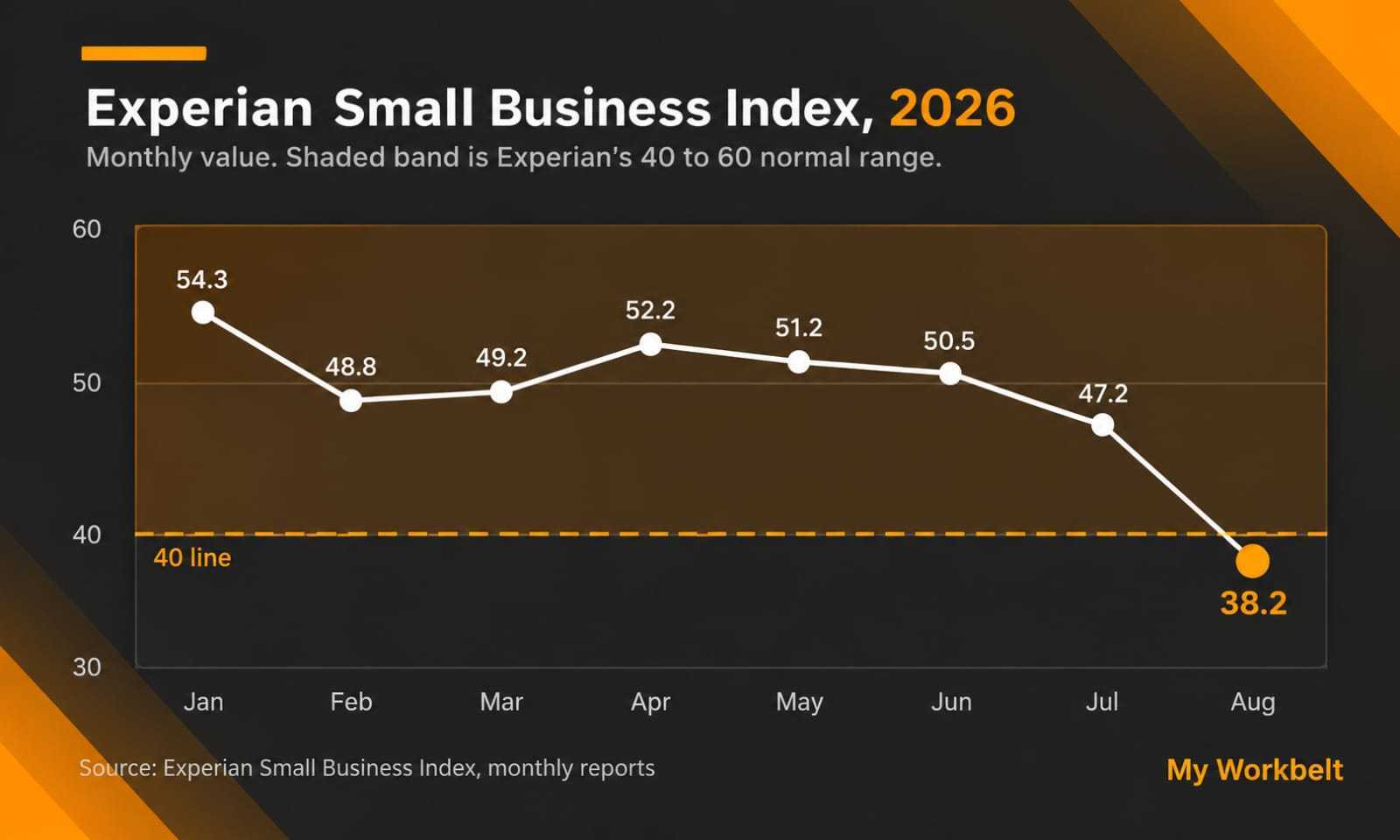
The Experian Small Business Index fell to 38.2 in August 2026. It was 47.2 a month before. That’s a 9-point drop in 30 days, and it pushes the index under the 40-line. Experian used to mark less favorable conditions for small business owners.
If you run an HVAC, plumbing, or electrical shop, you’ve probably felt some of this already. Here’s what the index measures, what Experian saw in July, the month before the drop, and what you can do about it this week.
What the Experian Small Business Index measures
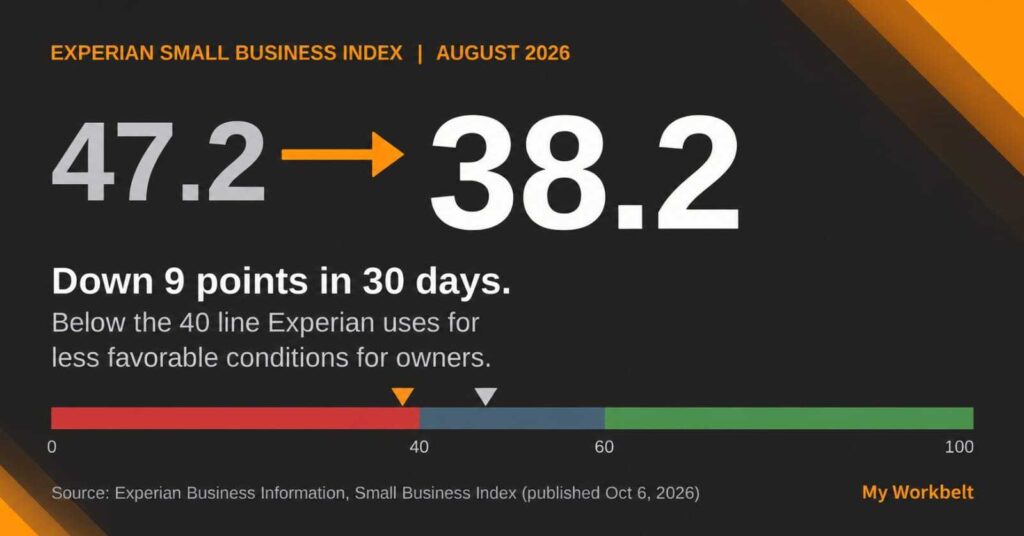
The index runs from 0 to 100. Experian puts normal conditions between 40 and 60. Below 40 means a less favorable environment for owners. Above 60 means a more favorable one.
What makes it different is the data. It blends the owner’s personal credit file with the business’s commercial data. It tracks emerging businesses, delinquency rates, credit utilization, and approval rates on new credit. Experian’s point is that for a small shop, the owner’s finances and the business’s finances are hard to separate. Anyone who has put a van on a personal card knows that.
What Experian saw in July
The July summary is worth reading closely. Experian reported:
- Small business utilization and 91+ day past-due rates went up.
- Owners showed more risk in their personal files, including higher 60+ day past-due revolving balances.
- The number of new consumer accounts owners opened fell, and so did the approval rate on new inquiries. Experian says owners may be facing tighter access to credit.
There was some good news. Headline inflation eased from 3.5% to 3.4%. Producer price inflation eased from 5.5% to 4.7%. Experian also notes the index was still 14.4 points above where it stood a year earlier in July.
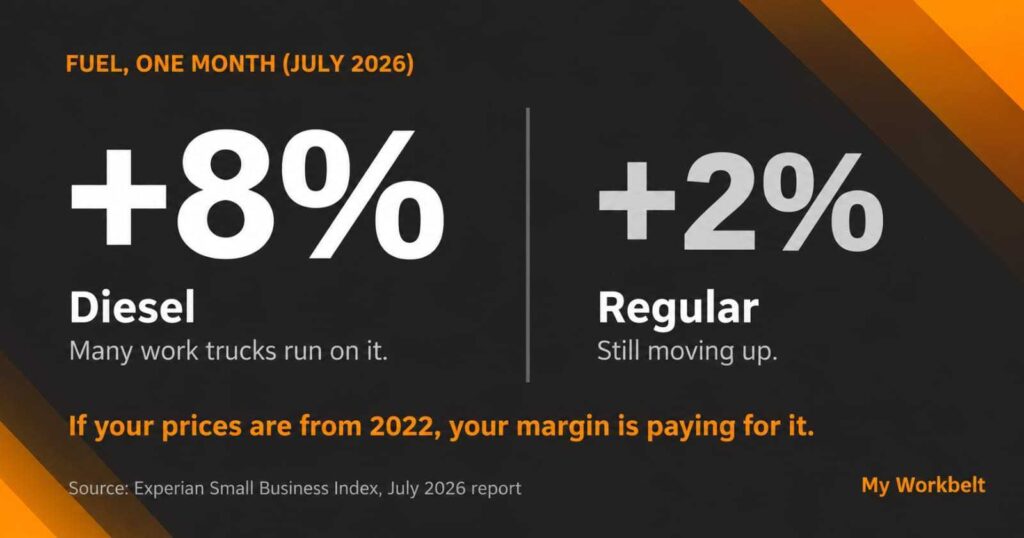
One number belongs on every truck owner’s radar: regular fuel rose 2% in the month, and diesel rose 8%.
Conditions were well ahead of last year in July. After August’s drop, they’re nearly level with it. That’s a bad time to guess your own numbers.
Why trade owners feel a credit squeeze first
Service businesses run on time. You buy parts and materials before the invoice goes out. You pay your tech every two weeks whether the customer pays in 5 days or 45. The gap gets covered by a line of credit, a card, or the owner’s own savings.
When approvals tighten, that gap gets harder to cover. The owners who handle it best aren’t the ones with the best credit score. They’re the ones who know exactly where their cash goes.
Picture this: the loan you didn’t need
A typical scenario MyWorkbelt clients uncover. Illustrative, not a specific client.
You run a 12-tech HVAC operation. Residential replacements are your bread and butter. Revenue looks healthy. The margin looks fine on paper.
Then Budget vs Actual shows you something your P&L never did. Materials on residential replacements are running $191 over estimate on every job. Across 94 jobs in six months, that’s $17,954 you never saw leave.
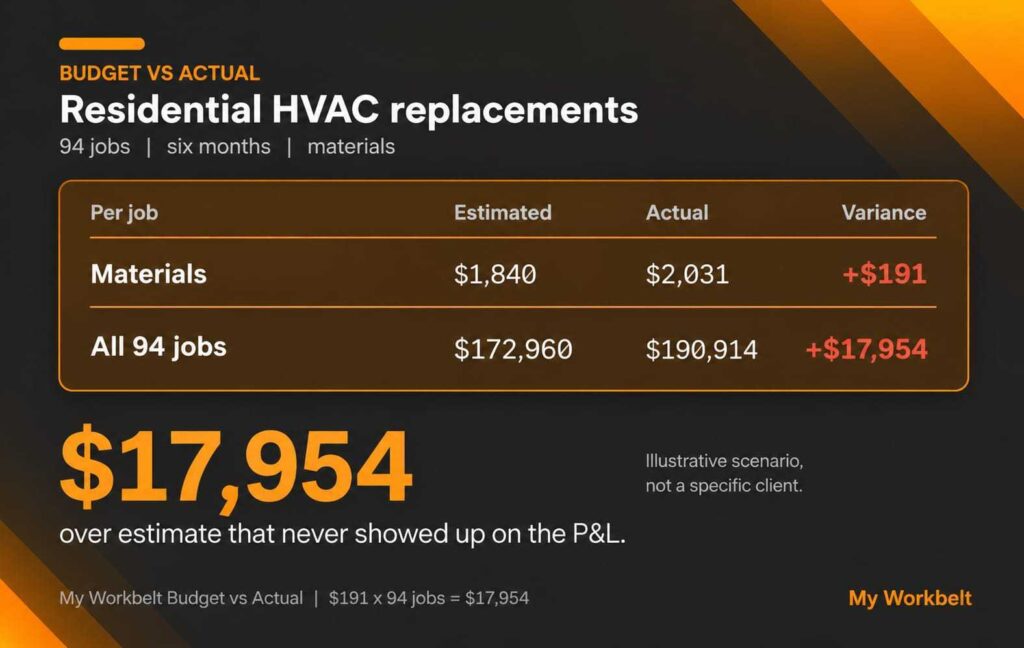
Now put that owner in front of a lender in month four, asking for a line of credit to cover a cash crunch. The loan wouldn’t be solving a shortage. It would cover a leak. And in a market where approval rates are falling, that’s a hard way to find out.
What you can control this week
You can’t move the Experian index. You can move your own numbers. Four things to do before you apply for anything:
- Pull your last six months of jobs and group them by job type. Replacements, service calls, installs. Not one blended total.
- Compare what you estimated to what the job cost. Materials, labor, and time on the job. Find the job type with the widest gap.
- Check your prices against today’s costs. Fuel alone moved 8% for diesel in one month. If your pricing is from 2022, your margin is paying for it.
- Sit down with your bookkeeper. Make sure your QuickBooks is reconciled before a lender or anyone else looks at it.
If you do those four, you’ll know more about your business than most owners who walk into a bank.
Where MyWorkbelt fits
We’re not a lender, and we don’t touch your credit score. We can’t tell you what your bank will approve.
What we do is show you what the credit conversation depends on: whether your jobs make money.
- Budget vs Actual compares what you estimated to what each job cost, by job type. You see the leak before the year ends.
- The monthly Growth Review is a call with your named Client Success Manager. They come prepared with your numbers for the month, and you leave with a short list of decisions.
- A QuickBooks integration validated by a QuickBooks ProAdvisor. Your bookkeeper can audit every sync action.
Jobber tracks your jobs. We track your profit.
Common questions
What is the Experian Small Business Index?
It’s a monthly index from 0 to 100 that measures how favorable the U.S. environment is for small business owners, based on blended personal and business credit data.
Does a low index mean I can’t get a loan?
No. The index describes the overall environment. Your approval depends on your own file and your lender. Experian does say a lower value points to a harder environment for gaining credit.
Can job costing help me get approved for credit?
No software can promise approval. Job-level numbers show you where cash is leaking, so you can borrow less, price better, and explain your business clearly.
How often is the index updated?
Monthly.
Does My Workbelt offer financing?
No. We’re field service software with a monthly profitability review built in.
Find out which of your jobs made you money last month
When credit gets tighter, your own jobs are the cheapest source of cash you have. Book a demo and we’ll show you Budget vs Actual on a scenario that looks like your shop.