For 20 years, I kept seeing the same problem.
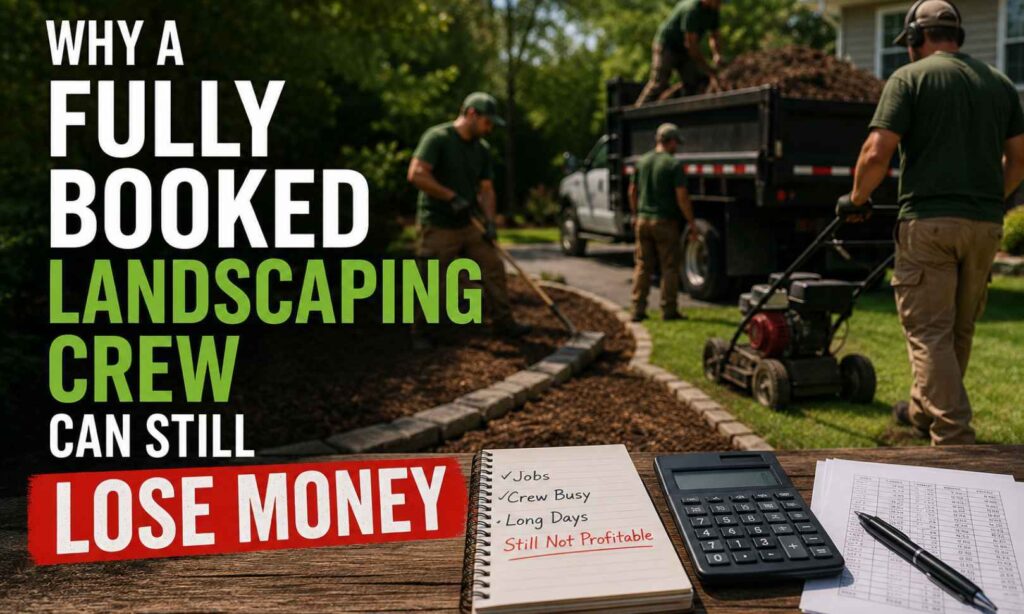
The owners would tell me they were busy. Exhausted. Growing. Trucks running, crews booked out weeks in advance; the phone never stopping. Every outward sign said the business was winning. Then the numbers came in, and profit wasn’t there. Not gone entirely. Just smaller than it should have been, and nobody could say why.
Nobody could answer a simple question: which jobs made money?
The month everything looked right and wasn’t
One general contractor stayed with me more than the rest. Every crew was on a job. Every truck was rolling. The whole team felt like the company was having its best month of the year.
Then the financials came together, and net profit was a fraction of what everyone expected.
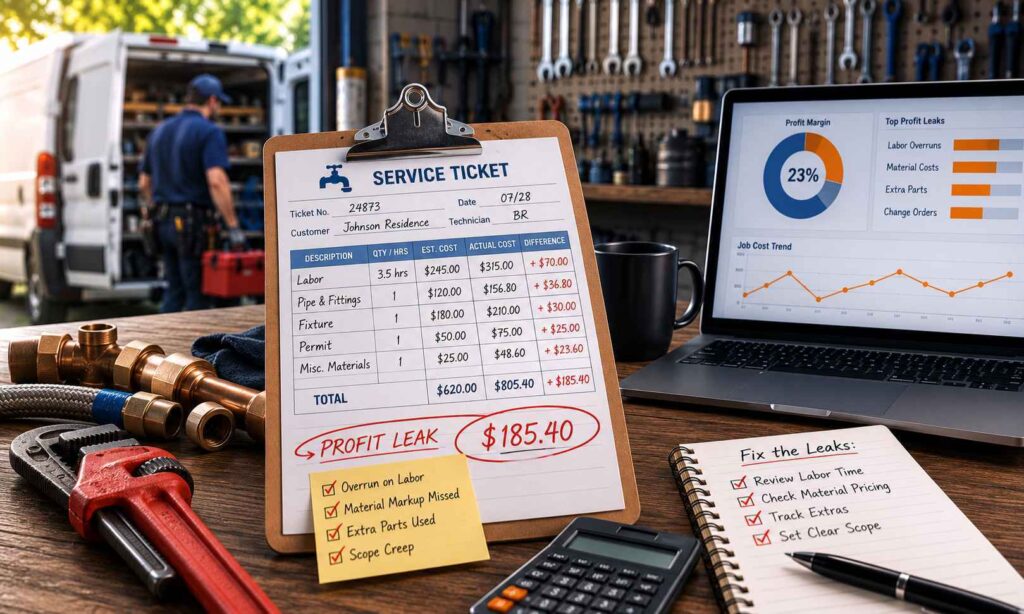
Revenue wasn’t a problem. The problem was that nobody in that company could see profitability at the job level. Some jobs were carrying out business. Others were quietly losing money, month after month, and no one knew which until it was already done.
Busy and profitable are not the same thing. Most owners don’t have a practical way to tell the difference until it’s too late to do anything about it.
How owners tried to answer it
Most companies I worked with used the same combination: spreadsheets, accounting reports, and gut feel built from years of experience.
The owner asks the bookkeeper for a report. Data is exported from accounting software. Someone manually reviews labor costs, material costs, overhead, and tries to reconstruct what a job actually costs after the fact.
Even in organized companies, it took hours every month. In smaller companies, it happened quarterly. Sometimes once a year, pulling the information together was too painful to do more often. By the time the answer showed up, the chance to act on it was gone.
To save time, some owners started reusing old estimates instead of creating new ones. Labor was quoted at last year’s rate. Materials were quoted at last year’s price. Nobody updated the numbers to reflect what things actually cost now. The estimate looked fine. The job lost money anyway.
Trying to fix it and not fixing it
I spent years building custom reports, dashboards, and integrations to solve this. Every one of them helped a little. None of them solved the actual problem.
The issue was never a lack of data. The owners had plenty of data. The problem was that it lived in four or five different places: the accounting system, the job-tracking tool, payroll, and a spreadsheet somebody built three years ago. None of those systems communicated in a way that produced an answer. The information people needed was trapped, not missing.
For a long time, the industry kept trying to make that process a little faster instead of asking whether the process itself was a problem.
The moment it became obvious
I remember sitting with an owner who was paying for several software subscriptions at once. He pulled up the dashboard after dashboard, chart after chart. I asked him one question.
“Which jobs made you money last month?”
Nobody in the room could answer with any confidence. The information existed somewhere, in pieces, across systems that didn’t add up to a decision.
That was the moment I stopped thinking the market needed another dashboard. It needed a business operating system built around profitability, not around reporting.
The question I kept asking for 20 years
Why do business owners work this hard and still not know where their profit is coming from?
I asked myself that question working with companies from around 5 employees to 250, from roughly half a million dollars in revenue to $100 million. Big enough to feel real operational complexity. Often too small to afford a dedicated financial analyst or an enterprise software team. The business size has changed. The question never did.
What software people get wrong
Most software developers assume data entry is the work. It isn’t.
Real work happens in the field. On the job site, in a truck, at a customer’s location, on the shop floor. Owners don’t want more screens. They want better decisions. The best software respects how people actually work and makes the business easier to run, instead of handing them one more administrative task at the end of a long day.
That’s the assumption I built My Workbelt against.
Why Budget vs Actual, and why a person must be in the room
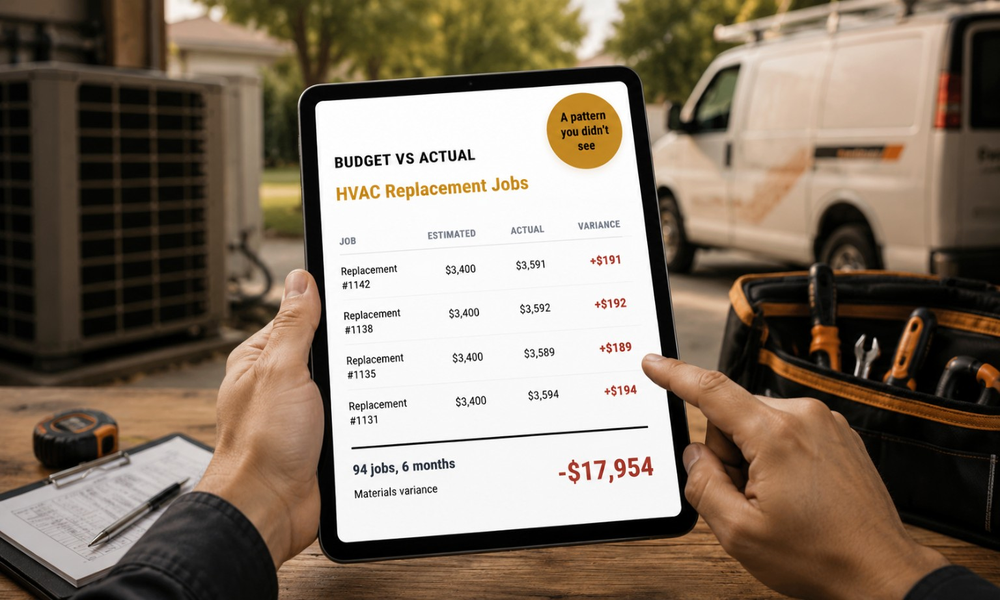
Budget vs Actual exists because it connects what happens on the job site to what shows up in the numbers, in real time, not three months later when the accountant finally closes the books. It turns a number into a decision while there’s still time to make one.
But a dashboard by itself doesn’t change behavior. I watched companies buy expensive reporting tools and business intelligence platforms that looked impressive in a sales demo. Nobody was accountable for turning any of it into action, so the tool got checked once and then ignored.
A monthly review with a real person creates the conversation that a dashboard can’t: what happened, why it happened, and what we do differently next month. That conversation is what makes the difference stick. The software surfaces the number. The review is what makes someone act on it.
What I want an owner to feel
If you’re reading this and you’ve ever looked at a packed schedule, growing revenue, and a busy team, and quietly wondered why it doesn’t feel like the business is hitting its potential, you’re not imagining it, and you’re not alone.
Profitability shouldn’t be a mystery you solve once a year with a bookkeeper and a shoebox of receipts. You already work hard enough. You deserve to know, every month, which jobs are actually worth doing again.